
residential redesign
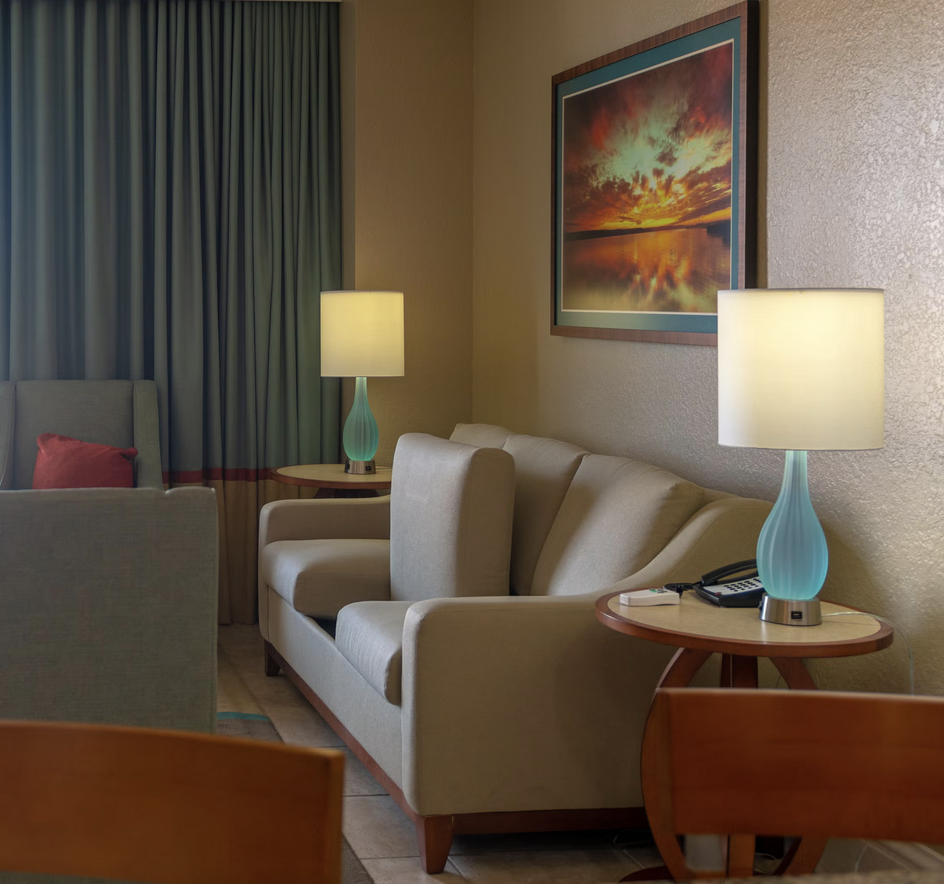
Before: Key Challenges Identified
Based on an evaluation of the existing space:
The beige-on-beige palette feels all-consuming and flat, lacking tonal depth or visual grounding.
Pops of blue and red look starkly out of place within the neutral environment, reading as unanchored accents rather than part of a cohesive scheme.
Oversized lamps disrupt the balance of the seating zone, visually compete with the furniture, and take up precious table space.
Tile flooring introduces a cold, uninviting feel, weakening the spatial warmth.
The rug is too small, causing the furniture to float rather than form a unified arrangement.
The placement of the sofa and chairs create tight circulation paths, making the room feel visually uninviting.
High-backed seating adds to the heaviness and contributes to a sense of enclosure rather than openness.
return to interiors
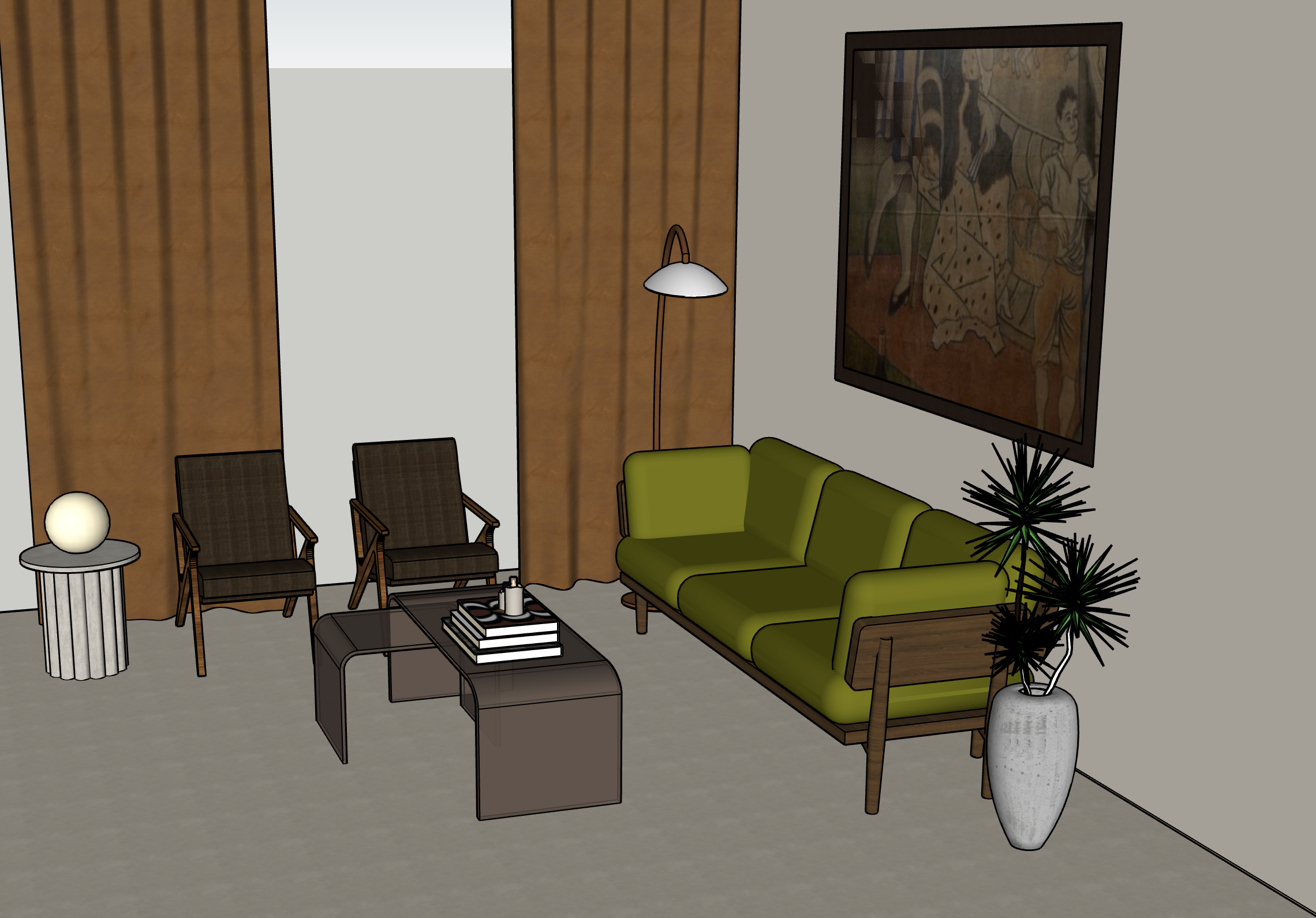
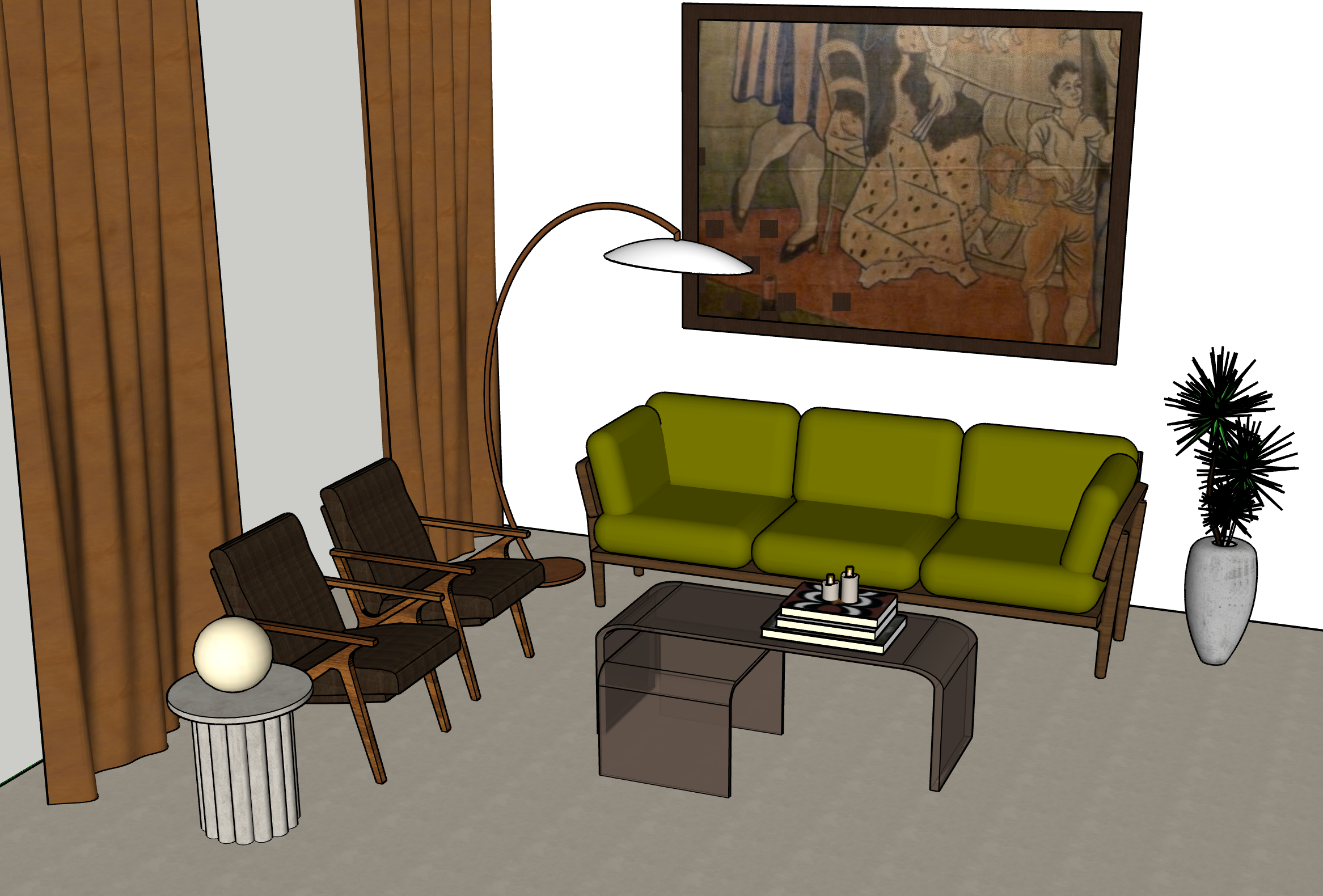
After: Design Solutions
The primary goals of the redesign:
Introduce warmth, texture, and grounding through an earthy modern palette.
Establish a cohesive visual identity by replacing discordant accent colors with tones drawn from natural materials.
Improve circulation by widening walkways, repositioning seating, and considering lower-profile silhouettes.
Use an appropriately scaled rug to anchor the seating area, restore balance, and to soften the coldness of the tile by creating a more tactile, intentional environment
Swap overly large lamps for a floor lamp that complements the scale and flow of the room, and frees up coffee table space previously occupied by table lamps.
The redesign embodies the belief that every element of a space should serve an intention. By shifting the palette, adjusting proportions, and refining circulation, the room transitions from visually cold and cluttered to harmonious, grounded, and emotionally resonant. The emphasis on earthy tones and modern silhouettes supports a feeling of natural calm, while the improved layout creates a sense of ease and invitation. The space is no longer simply furnished — it becomes an environment shaped by thoughtful choices meant to support comfort, clarity, and daily ritual.